
In this articleShow
The highlands around Sapa have been home to several peoples for generations, each with its own language, clothing and customs. Knowing a little about them before you walk into a village makes the visit better for both sides.
The Hmong
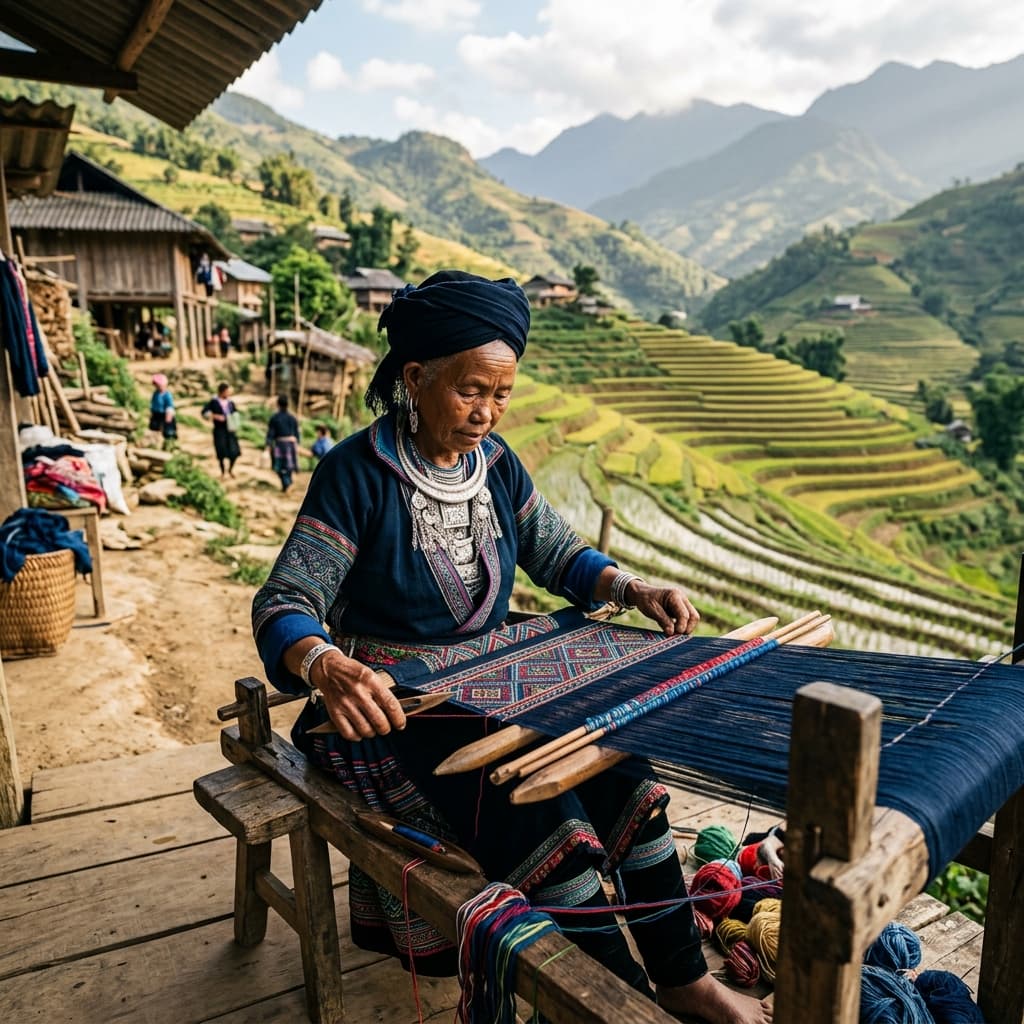
The Hmong are the largest group around Sapa, usually living in hillside villages such as Cat Cat, Lao Chai and Ta Van (the latter shared with the Giay). Black Hmong women wear dark indigo-dyed clothing woven from hemp and decorated with embroidery and beeswax-resist patterns. Silver is the main jewellery. Many families still grow hemp and weave and dye cloth at home.
The Red Dao
The Red Dao are the second-largest group, concentrated around Ta Phin and some villages on the road to Lai Chau. Red Dao women wear an elaborately embroidered red headdress and traditionally shave the front of the hairline. They are known for their knowledge of medicinal plants; the herbal bath was part of everyday life here long before it became a tourist activity.
The Tay
The Tay live mostly in lower valleys, farm wet rice and live in stilt houses. Their clothing is plainer, in indigo or dark blue with little bright embroidery. They are also a major group in the Ban Ho area.
The Giay
The Giay live in valleys such as Ta Van and farm terraced paddies. Many households run homestays, hosting visitors in stilt houses and eating with the family, which makes it the easiest place to see everyday village life.
There are also smaller communities of Xa Pho, Hoa and Kinh people. Each group celebrates the New Year, weddings and festivals on its own calendar, so a village can be busy or quiet depending on the date.
Visiting a Village: Simple Rules
- Ask before photographing people, especially children and elders. If they decline, respect it.
- Do not hand out money or sweets to children. It encourages them to skip school and beg from visitors; if you want to help, buy crafts directly from the people who make them.
- Dress modestly when entering a home and take your shoes off if asked. Do not step on the threshold or touch the altar.
- Buy crafts directly from the weaver or embroiderer. Ask the price once; if you do not buy, thank them and move on.
- Go with a local guide if you want to enter a home or see a festival; they know how to introduce you to a family.
- Take your rubbish with you, especially plastic bottles on the trail.
To visit villages with a local guide, see our Sapa tours or start with Cat Cat Village.